







A dermatologist backed guide to safe ingredients, proven alternatives, and a routine that works for every trimester.
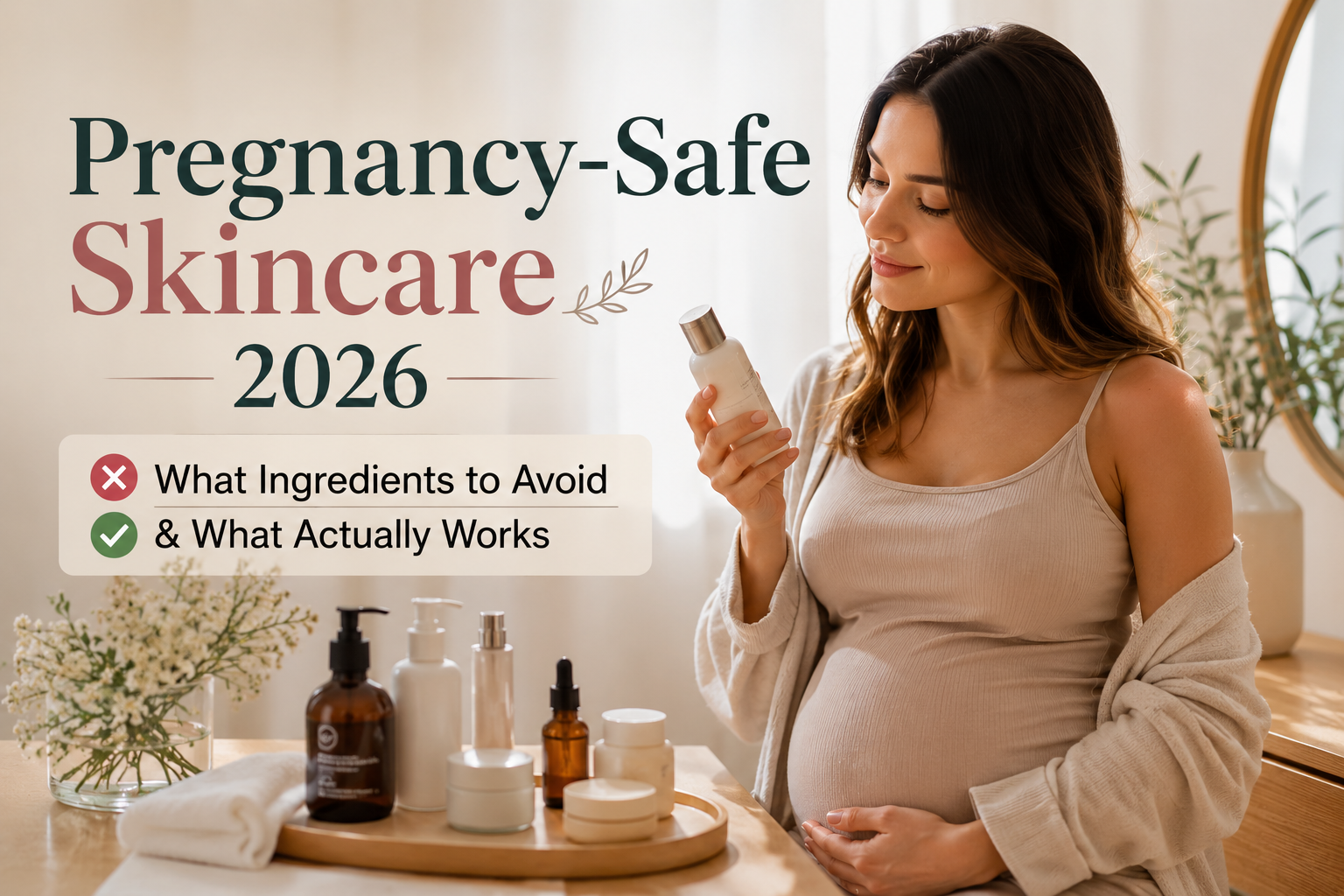
Pregnancy changes your skin fast. Specifically, hormonal shifts bring new sensitivity, unexpected breakouts, and melasma that did not exist before. At the same time, many popular skincare ingredients are no longer considered pregnancy safe, making it difficult to know which products to trust. This Pregnancy Safe Skincare 2026 guide explains the ingredients to avoid during pregnancy, highlights safe and effective skincare alternatives, and shows you how to create a simple pregnancy skincare routine that supports healthy skin while helping protect both you and your baby.
Safety At A Glance Table
| Ingredient | Pregnancy Safe? | Alternative |
| Retinol / Retinoids | ❌ Avoid | Bakuchiol |
| High dose Salicylic Acid | ❌ Avoid | Azelaic Acid |
| Hydroquinone | ❌ Avoid | Vitamin C / Niacinamide |
| Chemical Sunscreen (Oxybenzone) | ❌ Avoid | Mineral SPF (Zinc Oxide) |
| Benzoyl Peroxide | ⚠️ Limit | Gentle cleansers |
| Glycolic Acid (low dose) | ✅ Generally safe | — |
| Hyaluronic Acid | ✅ Safe | — |
| Niacinamide | ✅ Safe | — |
| Bakuchiol | ✅ Safe | — |
| Azelaic Acid | ✅ Safe | — |
| Vitamin C | ✅ Safe | — |
| Mineral SPF (Zinc Oxide) | ✅ Safe | — |
Red Flag Ingredients to Avoid
These ingredients carry real risks during pregnancy. According to Healthline, dermatologists consistently recommend avoiding them, especially in the first trimester, when fetal development is most sensitive.
Retinoids and Retinol
Retinoids are vitamin A derivatives. In fact, most dermatologists and obstetricians recommend avoiding all retinoids during pregnancy as a precaution. Vitamin A derivatives directly influence fetal development. This includes prescription tretinoin, adapalene, and over the counter retinol serums. However, the good news is that bakuchiol delivers similar results safely.
High Dose Salicylic Acid
High dose oral salicylates are not recommended during pregnancy. Occasional use of low concentration topical salicylic acid products is generally considered low risk. However, most dermatologists advise avoiding it altogether, especially in the first trimester.
Hydroquinone
Hydroquinone is a powerful skin lightening ingredient commonly used to treat hyperpigmentation and dark spots. However, it has a high skin absorption rate, which is why dermatologists generally recommend avoiding hydroquinone during pregnancy. For pregnancy safe treatment of melasma and uneven skin tone, consider using vitamin C or niacinamide instead, as both ingredients can help brighten the skin and reduce discoloration more safely.
Chemical Sunscreen Filters
Dermatologists generally recommend mineral sunscreen formulas during pregnancy. Specifically, some chemical sunscreen filters have raised concerns because they may interfere with hormonal activity, making them less desirable for pregnancy safe skincare. Instead, choose a broad spectrum mineral sunscreen with zinc oxide or titanium dioxide, as these ingredients provide effective UV protection and are widely considered safer options during pregnancy.
Essential Oils Specific Types
Dermatologists advise limiting certain essential oils during pregnancy, including camphor, clary sage, cinnamon, tansy, and hyssop. These can induce uterine contractions or block certain hormones.
What Actually Works
Safe does not mean ineffective. These three ingredients are dermatologist approved and genuinely deliver results during pregnancy.
Bakuchiol: The Natural Retinol Substitute
Bakuchiol comes naturally from the babchi plant. Importantly, it perfectly mimics retinol’s collagen stimulating and cell turnover benefits. Furthermore, it works through a different biological pathway that carries no known pregnancy risk. Clinical studies of Osmiaskincare confirmed that bakuchiol safely reduces fine lines. It also suits sensitive skin well. Use it in a serum format every night as a direct swap for your retinol.
Azelaic Acid: The Hyperpigmentation Eraser
Azelaic acid is one of the safest active ingredients available for use during pregnancy. Moreover, the American College of Obstetricians and Gynecologists (ACOG) specifically recommends it for acne during pregnancy and stubborn melasma. It calms deep inflammation, reduces pigmentation, and unclogs pores beautifully. A simple 10% concentration in a serum format works well for most skin profiles.
Vitamin C: The Safe Glow Booster
Vitamin C is a pregnancy safe skincare ingredient that helps brighten the complexion and reduce melasma without affecting hormonal balance. As a powerful antioxidant, it protects the skin from environmental stressors while supporting a more even skin tone. Look for products containing L ascorbic acid or stable vitamin C derivatives such as ascorbyl glucoside. For best results, apply a vitamin C serum in the morning before your broad spectrum SPF. Niacinamide also pairs well with vitamin C and can help refine the appearance of large pores, improve skin texture, and support a healthy skin barrier during pregnancy.
How to Build a Pregnancy Safe Skincare Routine
A simple routine works better than a complicated one during pregnancy. Skin is more reactive. Therefore, fewer products with cleaner ingredient lists deliver more reliable results.
Morning Routine:
- Gentle cleanser: Fragrance free, non stripping
- Vitamin C serum: Brightening and antioxidant protection
- Niacinamide serum (optional): For oily or acne prone skin
- Lightweight moisturizer: Hyaluronic acid base
- Mineral SPF 30+: Zinc oxide or titanium dioxide only
Night Routine:
- Gentle cleanser: Same as morning
- Azelaic acid serum: For acne or hyperpigmentation
- Bakuchiol serum: Retinol alternative for texture and tone
- Rich barrier moisturizer: Ceramides, shea butter, or squalane
First Trimester Note: Skin is often more sensitive and reactive during the first trimester due to hormonal changes. Start with the gentlest pregnancy safe skincare products, introduce one new product at a time, and patch test every skincare product before applying it to your full face.
Top Pregnancy Safe Product Picks
Best Gentle Cleanser: CeraVe Hydrating Cleanser ($15)
CeraVe’s Hydrating Cleanser uses ceramides and hyaluronic acid to cleanse without stripping the barrier. It is fragrance free, non comedogenic, and dermatologist tested. It suits all skin types and works across all three trimesters without irritation.
- Price: $15
- Key ingredients: Ceramides, hyaluronic acid
- Available at Ulta store.
Best Brightening Serum: The Inkey List Vitamin C Serum ($18)
The Inkey List delivers a stable vitamin C formula at a highly accessible price point. It brightens skin, protects against environmental damage, and targets melasma safely. Moreover, the formula is fragrance free and absorbs quickly without pilling under mineral sunscreen.
- Price: $18
- Key ingredients: Ascorbyl glucoside (stable Vitamin C).
- Available at Sephora
Best Barrier Moisturizer: First Aid Beauty Ultra Repair Cream ($16–$38)
First Aid Beauty Ultra Repair Cream is one of the most dermatologist recommended pregnancy safe moisturizers. It contains colloidal oatmeal and shea butter, which help soothe sensitive skin and support the skin barrier. As a result, this rich moisturizer helps calm irritation and provides overnight barrier repair for dry, reactive pregnancy skin.
- Price: $42–$66 depending on size
- Key ingredients: Colloidal oatmeal, shea butter
- Available at Ulta, Sephora, and official brand outlets
Pros & Cons
Pros:
- Pregnancy safe skincare alternatives like bakuchiol and azelaic acid genuinely work for acne and pigmentation concerns.
- A simplified skincare routine is better for reactive pregnancy skin and helps reduce irritation.
- Most pregnancy safe skincare products are available at accessible prices and are easy to find.
- Mineral SPF helps protect against melasma, one of the most common pregnancy related skin issues.
- Niacinamide and hyaluronic acid are considered safe throughout all three trimesters.
Cons:
- Retinoids must be completely avoided during pregnancy, and alternatives like bakuchiol usually work more slowly.
- Some concerns, such as melasma, may not fully resolve until after delivery due to hormonal changes.
- First trimester skin can react unpredictably, making patch testing essential for every new product.
- Careful label reading is required, as not all natural or clean skincare products are automatically pregnancy safe.
Final Verdict
Pregnancy safe skincare 2026 does not mean giving up on effective skincare. It means making smarter ingredient choices. Bakuchiol replaces retinol. Azelaic acid handles acne and pigmentation. Vitamin C and niacinamide maintain glow and skin health. Mineral SPF protects against melasma every single day.
Moreover, the routine does not need to be complicated. A gentle cleanser, two targeted serums, a good moisturizer, and a mineral SPF cover the most important bases safely. Keep it simple. Check every label. When in doubt, consult your dermatologist or OB before adding anything new to your routine.
FAQs
Q1. Is salicylic acid safe during pregnancy?
Ans. Yes, low concentration topical salicylic acid (under 2%) in over the counter cleansers is generally considered safe by ACOG guidelines. However, high dose chemical peels must be completely avoided.
Q2. Can I use niacinamide during pregnancy?
Ans. Yes, hyaluronic acid is naturally present in the body and is considered a pregnancy safe skincare ingredient. It is safe to use throughout all three trimesters and helps provide deep hydration, improve skin moisture, and support a healthy skin barrier.
Q3.Are all natural or organic products safe for pregnancy?
Ans. No, not all natural or organic products are pregnancy safe. In fact, some organic beauty products contain potent essential oils such as clary sage that can trigger early contractions. Always read ingredient lists carefully.
Can I use hyaluronic acid during pregnancy?
Ans. Yes, hyaluronic acid is naturally found in human body tissue. Therefore, it is entirely safe to use throughout all three trimesters for intense hydration.
Reviewed by Maya Kim, Beauty & Skincare Editor at Candid Discoveries.