



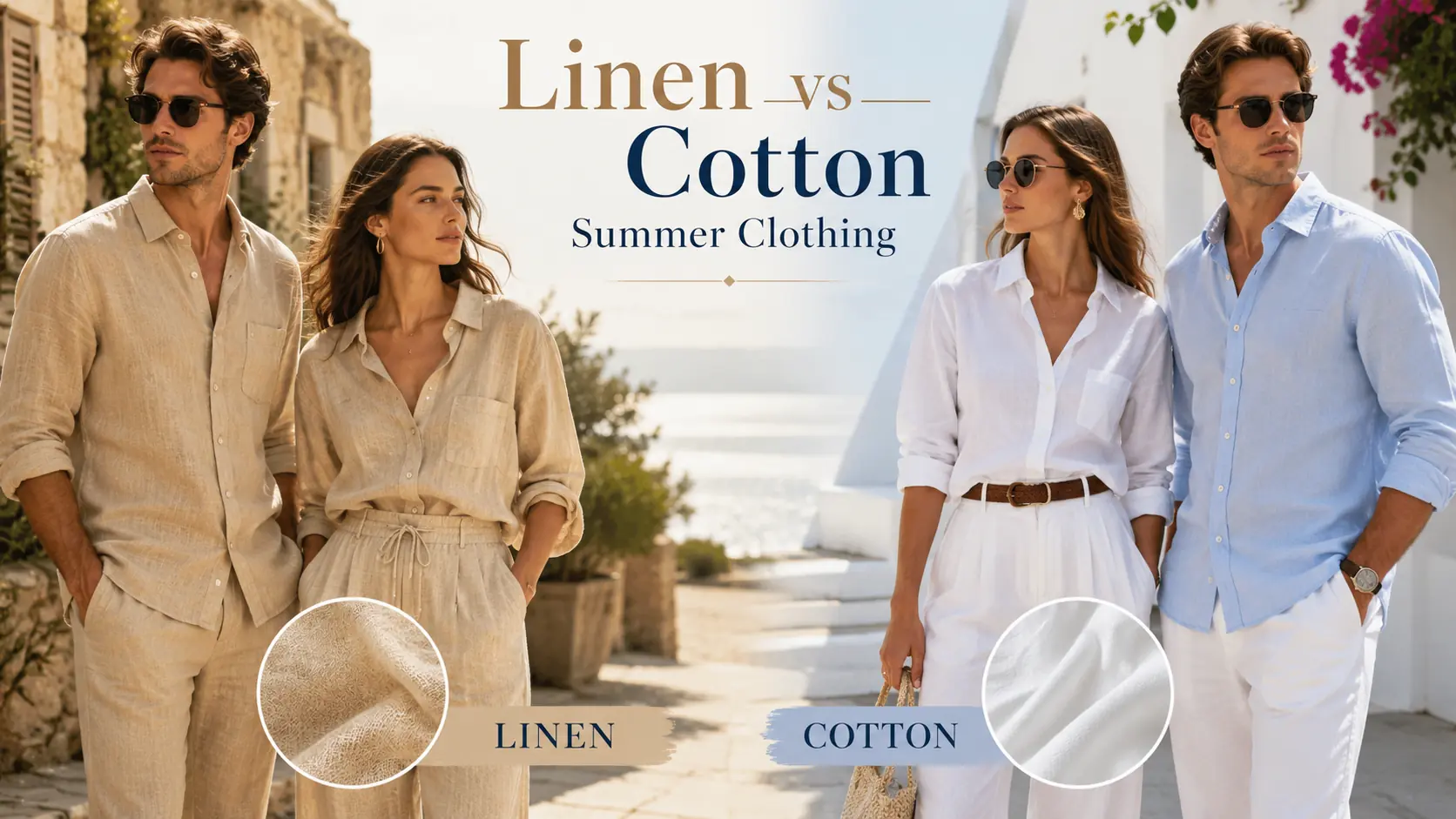
Some fabrics look perfect for summer, but not all of them actually feel good once the heat kicks in. The debate over linen vs. cotton summer clothing isn’t just about style; it’s about what keeps you comfortable when temperatures rise. Both are breathable, natural fabrics, but they behave very differently on the body. One keeps you feeling airy but wrinkles easily, while the other feels soft and familiar but can sometimes hold onto heat. If you’ve ever struggled choosing between the two, this guide will make it simple.
Understanding the Linen vs Cotton Fabrics
Before comparing performance, it helps to know what you are actually working with.
Linen comes from the flax plant. It has a thicker, looser weave with hollow fibers, which is exactly why air passes through it so easily and why it feels cool against the skin.
Cotton comes from the cotton plant. It is smooth, soft, and uniform, which makes it the true workhorse of fashion easy to spin into countless fabric types, from jersey to poplin to denim.
Quick Comparison Table
| Category | Linen | Cotton |
| airflow | Superior, hollow fibers, max airflow | Good, but traps moisture in humidity |
| Feel Out of the Box | Crisp, slightly rough | Soft immediately |
| Wrinkling | Wrinkles easily, part of the look | Holds shape better |
| Durability | Lasts longer, strengthens when washed | Wears down faster over the years |
| Price | 50 to 100% more expensive | More affordable, widely available |
| Best For | Hot, humid climates | daily versatility |
How Linen and Cotton Keep You Cool
Both fabrics come from natural sources, both are breathable, and both belong in a summer wardrobe. But they cool the body in very different ways and that difference matters more than most people realize when standing in a fitting room in peak summer heat.
Linen is highly breathable and handles moisture well, especially when made with a loose weave. It absorbs moisture and tends to dry faster than cotton, while the open structure allows more air to circulate around the body. On hot, humid days, that combination can help linen feel lighter and less clingy.
Cotton is breathable and absorbs moisture well, but it can hold onto that moisture longer than linen. Once the fabric becomes damp, it may feel heavier and cling closer to the skin, particularly in humid weather. Lightweight cotton weaves such as poplin or voile can still perform well in hot, dry condition.
Bottom line: linen has the edge for hot and humid weather because it handles airflow and moisture particularly well. Cotton still makes sense for hot, dry conditions and everyday wear, especially when you choose a lightweight weave. Your climate and activity level matter almost as much as the fiber itsel.
Texture & Comfort
This is where most people get surprised. Cotton feels better the moment you put it on soft, familiar, and comfortable right away. Linen, on the other hand, can feel stiff and slightly rough when it’s new, which is why many shoppers dismiss it too quickly.
But linen changes with time. After a few washes, it softens significantly and develops that relaxed, lived in texture people often associate with high end summer wear. Cotton usually starts off at its best, then slowly loses some of its softness and structure with repeated washing.
So the real question isn’t which fabric feels better today it’s whether you want instant comfort or a fabric that improves with wear.
Wrinkles
Let’s be honest about this one, because most fabric guides tend to soften the truth. Linen wrinkles quickly and often. You can steam it, press it, or hang it perfectly, and it will still crease the moment you sit down. For some people, that relaxed, slightly undone look is exactly the appeal and part of linen’s modern charm. For others, especially in office settings or travel heavy days, it can be a real dealbreaker.
Cotton holds its shape far better, particularly in tighter weaves like poplin or twill. If wrinkle free mornings matter more to you than texture, cotton is the more practical pick. Linen cotton blends exist specifically to soften this trade off, keeping some of linen’s breathability while reducing the crease factor.
Durability
Linen is the stronger fiber, full stop. It’s woven from long flax strands that resist breaking down, and unlike most fabrics, linen actually gets stronger when wet. Well made linen pieces can last well over a decade with proper care, and that durability is big part of why the of why the higher price point makes sense in the long run.
Cotton is more delicate by comparison. It softens fast, which feels great early on, but that same process eventually thins the fibers and shortens the garment’s lifespan. A well loved cotton shirt typically holds up for three to five years of regular wear before it starts showing real wear fraying, thinning, losing its shape.
If you’re building a capsule cmeant to last, linen pieces are the better long term investment, even with the higher price tag upfront.
Cost
Linen typically costs about 50% to 100% more than comparable cotton, and that price gap comes down to how it’s made. Flax is more labor intensive to grow and harvest, produces less usable fabric per acre, and requires more processing than cotton. In simple terms, you’re paying for a more complex and resource heavy production process.
Whether it’s worth it really depends on how how you shop. If you invest in a few well made linen pieces and wear them for years, the cost per wear can end up lower than constantly replacing cheaper cotton basics. But if you like refreshing your wardrobe more often or prefer budget friendly buys, cotton’s lower upfront price usually makes more sense. Neither option is wrong it’s more about your habits and how you build your wardrobe over time.
Best Fabric for Sensitive Skin:
Both fabrics are considered safe choices for sensitive skin, but they help in slightly different ways.
- Linen is naturally hypoallergenic and resists bacteria and dust mites due to its loose weave, which helps keep moisture away from the skin.
- Cotton, especially organic or unprocessed cotton, is often recommended for eczema prone skin because of its soft, smooth feel.
- During flare ups, cotton usually feels gentler, while linen’s texture can sometimes feel slightly rough on irritated skin.
- Conventional cotton farming uses more pesticides than most crops, so chemically treated or heavily dyed cotton can occasionally trigger sensitivity in reactive skin.
Style & Occasion Guide
Linen works best for:
- Beach vacations and resort wear
- Relaxed weekend outfits
- Warm weather weddings and outdoor events
- Anywhere a slightly rumpled, effortless look fits the vibe
Cotton works best for:
- Office and workwear that needs to stay neat and structured throughout the day
- Everyday basics like T shirts, button downs, and casual dresses
- Travel days where wrinkle resistance matters more than texture
- Building a budget friendly capsule wardrobe that’s easy to maintain
A lot of the best summer wardrobes don’t choose just one. They rely on cotton for everyday, high rotation pieces, and use linen for moments where breathability and texture really make a difference.
Sustainability: Which Fabric Is the Better Choice?
Linen generally has a lighter environmental footprint. Flax needs less water and fewer pesticides to grow compared to conventional cotton, and its long lifespan also means fewer replacements over time, rwhich cuts down on textile waste. Research shows standard cotton farming remains water and chemical intensive at scale even with this gap.
If sustainability is a priority in your summer wardrobe, linen or at least organic cotton is the more responsible long term choice.
Best Choice for You
Choose Linen if
- You live in a hot, humid climate for most of the summer
- You don’t mind a relaxed, naturally wrinkled look
- You prefer investing in fewer, longer lasting pieces
- Breathability matters more to you than a perfectly smooth finish
Choose Cotton if:
- You want instant comfort straight out of the package
- Your wardrobe needs to look polished for work or office settings
- You’re shopping on a tighter budget
- You prefer easy care fabrics that need less ironing
Final Verdict
There’s no clear winner in the linen vs cotton summer clothing debate only two fabrics designed for different needs. Linen justifies its higher price with better breathability, stronger durability, and a naturally textured finish that improves with age. Cotton, on the other hand, stands out for its comfort, affordability, and everyday reliability.
The smartest summer wardrobes in 2026 don’t choose one over the other. They use cotton for the basics worn week after week, and bring in linen for the pieces where breathability and texture genuinely make a difference on beach days, warm evenings, and anywhere comfort matters most.
FAQs
Q1. Does linen keep you cooler than cotton?
Ans. Linen’s hollow fibers and looser weave allow for better airflow and faster moisture wicking, making it more effective in hot, humid conditions than cotton.
Q2. Is linen or cotton better for hot weather?
Ans. Linen generally has the edge in hot and humid weather because it offers excellent airflow and handles moisture well. Lightweight cotton can still be a great choice for hot, dry conditions and everyday summer wear.
Q3. Is linen clothing worth the higher price?
Ans. Yes, especially if you wear it often. Linen is more durable, improves with age, and can offer better long term value despite the higher upfront cost.
Q4. When not to wear linen?
Ans. Avoid linen when you need a crisp, wrinkle free look like formal office settings, strict dress codes, or travel days where you want your outfit to stay neat.
Q4. Is 100% cotton the same as 100% linen?
Ans. No, they are completely different fabrics. Cotton is soft, smooth, and more wrinkle resistant, while linen is stronger, more breathable, and has a naturally textured, wrinkled finish.
Reviewed by Sophia Carter, Fashion & Style Writer at Candid Discoveries.