








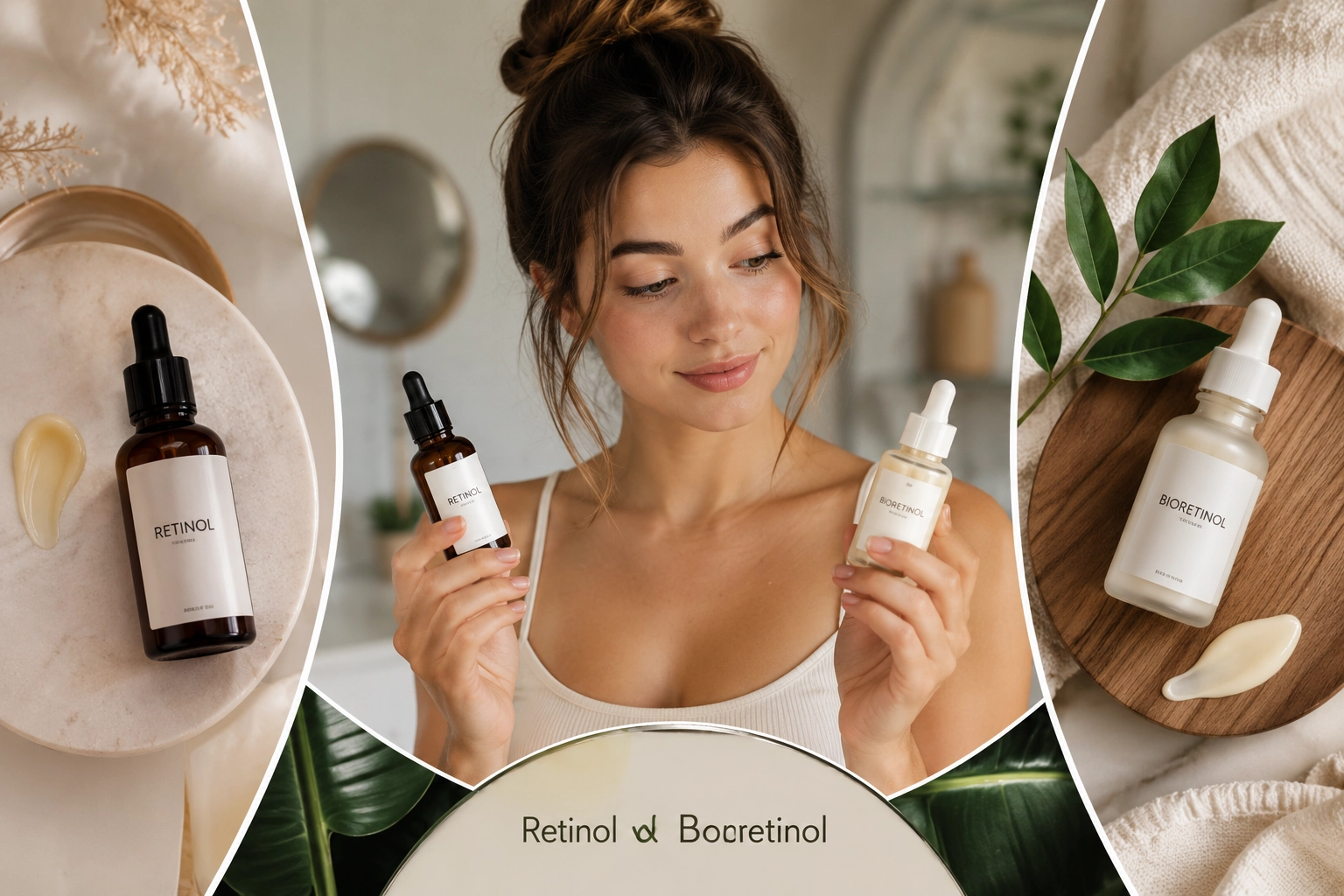
Retinol vs Bioretinol is one of the biggest debates in anti aging skincare. One is the gold standard for reducing fine lines and wrinkles, while the other is a gentler, plant based alternative gaining serious attention. Both promise younger looking skin and deliver results, but not for everyone. The right choice depends on how quickly you want results and how much irritation your skin can handle. Here’s what you need to know before you.
Quick Comparison Table
| Category | Retinol | Bioretinol |
| Source | Vitamin A derivative (synthetic/animal) | Plant based (Bakuchiol, Bidens Pilosa) |
| Strength | Stronger, faster results | Gentler, slower results |
| Side Effects | Dryness, redness, purging | Minimal to none |
| Best For | Oily/normal skin, experienced users | Sensitive skin, beginners |
| Sun Sensitivity | Increases sensitivity: use at night only | Generally less sun sensitive than retinol |
| Results Timeline | 4 to 12 weeks | 8 to16 weeks |
| Price Range | $10 to $80 | $15 to $90 |
What Is Retinol?
Retinol is a Vitamin A derivative and one of the most clinically proven anti aging ingredients available. It speeds up skin cell turnover, stimulates collagen production, fades hyperpigmentation, and visibly reduces fine lines over time. The trade off is irritation: retinol increases sun sensitivity, must be used at night, and often causes an initial period of dryness and redness, especially for beginners.
What Is Bioretinol?
Bioretinol is a plant based ingredient that activates the same skin pathways as retinol: collagen stimulation, cell turnover, melanin reduction: without the irritation. The most common source is Bakuchiol, from the babchi plant used in Ayurvedic medicine for centuries. Bidens Pilosa, a South American plant extract, is another option gaining ground in 2026 formulations. Unlike retinol, bioretinol is stable in sunlight and safe to use both morning and night.
Retinol vs Bakuchiol: Which Is Better for Your Skin?
Retinol
- Stronger evidence
- More established
- Faster/more predictable results
- More irritation potential
Bakuchiol
- Plant derived
- Different molecule from retinol
- Promising anti aging evidence
- Generally better tolerated in the 12-week trial
The direct 2019 trial involved 44 participants and found both 0.5% bakuchiol and 0.5% retinol improved wrinkles and hyperpigmentation, while retinol users reported more scaling and stinging.
Sustainability and Sourcing
Most Bioretinol guides overlook this important detail. Bakuchiol, one of the most popular plant based retinol alternatives, may sound like the more sustainable choice, but it comes from the babchi plant, which is native to Central and Eastern India and has faced growing pressure from over harvesting as demand increased. If sustainability matters to you, choose skincare brands that use ethically sourced Bakuchiol or look for Bioretinol formulas made with Bidens Pilosa, which offers a more eco friendly option with less environmental impact.
Retinol vs Bioretinol: How Do They Actually Compare?
Both ingredients target the same skin concerns: fine lines, uneven tone, loss of firmness: but they get there differently. Retinol produces faster, more dramatic results because it works more aggressively at the cellular level. Most people see visible improvement in texture and fine lines within 4 to 12 weeks of consistent use. Bioretinol works more gradually, with results typically appearing between 8 and 16 weeks, but without the adjustment period that makes many beginners abandon retinol entirely.
A 2019 peer reviewed study in the British Journal of Dermatology compared Bakuchiol and retinol directly and found that both significantly reduced wrinkle count and hyperpigmentation after 12 weeks, with Bakuchiol causing significantly less dryness and irritation. For beginners or anyone with sensitive skin, getting the same powerful results without the painful flaking is an absolute win.
Retinol Side Effects: What Beginners Need to Know
Retinol side effects are real and often underestimated by first time users. The most common include:
- Dryness and flaking: especially in the first 2 to 4 weeks
- Redness and sensitivity: particularly around the nose and mouth
- Purging: temporary breakouts as skin cell turnover accelerates
- Sun sensitivity: retinol degrades in UV light and makes skin more vulnerable to sun damage; c30 or above is non negotiable during the day
Always patch test before applying retinol to your full face, and never start with a concentration above 0.25% if you are new to the ingredient.
Who Should Use Retinol?
Best for:
- Oily or normal skin types with no history of sensitivity
- Experienced skincare users already comfortable with active ingredients
- Anyone wanting faster, more dramatic anti aging results
- Acne prone skin: retinol also helps regulate sebum and prevent clogged pores
Not ideal for:
- Sensitive skin or rosacea: risk of severe irritation
- Pregnancy or breastfeeding: Vitamin A derivatives are not recommended
- Complete beginners who have not yet established a stable skincare routine
Who Should Use Bioretinol?
Best for:
- Sensitive, reactive, or easily irritated skin
- Beginners starting their first anti aging routine
- Anyone who prefers plant based, natural retinol alternatives in their routine
Not ideal for:
- Those wanting the fastest possible results: bioretinol requires more patience
- Skin that has already tolerated retinol well: there is no added benefit to switching
Retinol or Bioretinol for Acne?
When it comes to Retinol vs Bioretinol for acne, Retinol has the stronger clinical evidence. It speeds up skin cell turnover, helps prevent clogged pores, and reduces breakouts, making it a reliable choice for acne prone skin. Beginners often start with a low strength retinol to build skin tolerance.
If your acne prone skin is also sensitive or easily irritated, Bioretinol may be the better option. It supports healthy skin renewal, helps fade post acne marks and hyperpigmentation, and is less likely to trigger redness or irritation. Bakuchiol, a popular plant based retinol alternative, also offers anti inflammatory benefits that can help calm active acne while supporting healthier, smoother skin.
Getting Started with Retinol or Bioretinol
The Sandwich Technique (for retinol beginners): Apply a thin layer of moisturizer first, then your retinol, then another layer of moisturizer on top. This buffers the retinol from direct contact with bare skin and significantly reduces the risk of dryness and irritation without reducing its effectiveness.
Skin Cycling: Rather than applying retinol every night, follow this 4 night rotation that has gained widespread dermatologist support in 2026:
- Night 1: Exfoliate (AHA or BHA)
- Night 2: Retinol or Bioretinol
- Night 3 to 4: Recovery (hydrating serum + moisturizer only)
This gives your skin barrier time to repair between active nights, which reduces cumulative irritation and makes the routine sustainable long term.
Cross Layering Warnings: Do not layer retinol with the following on the same night:
- Vitamin C: combining acidic Vitamin C with retinol can cause irritation and reduces the stability of both ingredients
- Copper Peptides: copper peptides and retinol work against each other at a molecular level; use them on alternate nights
Bioretinol does not carry the same layering restrictions and is generally safe to combine with most serums and moisturizers.
Final Verdict
The Retinol vs Bioretinol debate doesn’t have a one size fits all answer. If you want the fastest, clinically proven anti aging results and your skin tolerates active ingredients well, Retinol is still the better choice. If you have sensitive skin, you’re new to skincare, or you prefer a gentler, plant based alternative, Bioretinol is the smarter option. Both can improve your skin over time the best choice is the one you can use consistently without irritation.
FAQs
Q1. Is bioretinol as effective as retinol?
Ans. Clinical studies show bioretinol: particularly Bakuchiol: produces comparable results to retinol for fine lines and hyperpigmentation over 12 weeks, but with significantly less irritation. Results take slightly longer to appear.
Q2. Can beginners use retinol directly?
Ans. Yes, but start with the lowest available concentration (0.025%–0.1%) and use the sandwich technique to buffer irritation. Begin with two nights per week and build up gradually.
Q3. What is skin cycling and does it work?
Ans. Skin cycling is a 4 night routine alternating between exfoliation, retinol, and recovery nights. Dermatologists increasingly recommend it in 2026 as a way to get the benefits of active ingredients while protecting the skin barrier from cumulative irritation.
Q4. Is bioretinol the same as retinol?
Ans. No, Bioretinol is not the same as Retinol. Retinol is a vitamin A derivative, while Bioretinol is a plant based alternative designed to provide similar skin benefits with less irritation.
Reviewed by Maya Kim, Beauty & Skincare Editor at Candid Discoveries