









A damaged skin barrier can cause dryness, irritation, redness, and sensitivity, which is why La Roche Posay Cicaplast remains popular for barrier repair skincare. Dermatologists recommend it, TikTok creators keep praising it, and it remains one of the most searched skin barrier repair creams worldwide. But does it really deserve the hype in 2026? In this La Roche Posay Cicaplast review, we look at its ingredients, texture, performance, and suitability for different skin types.
What Is La Roche Posay Cicaplast?
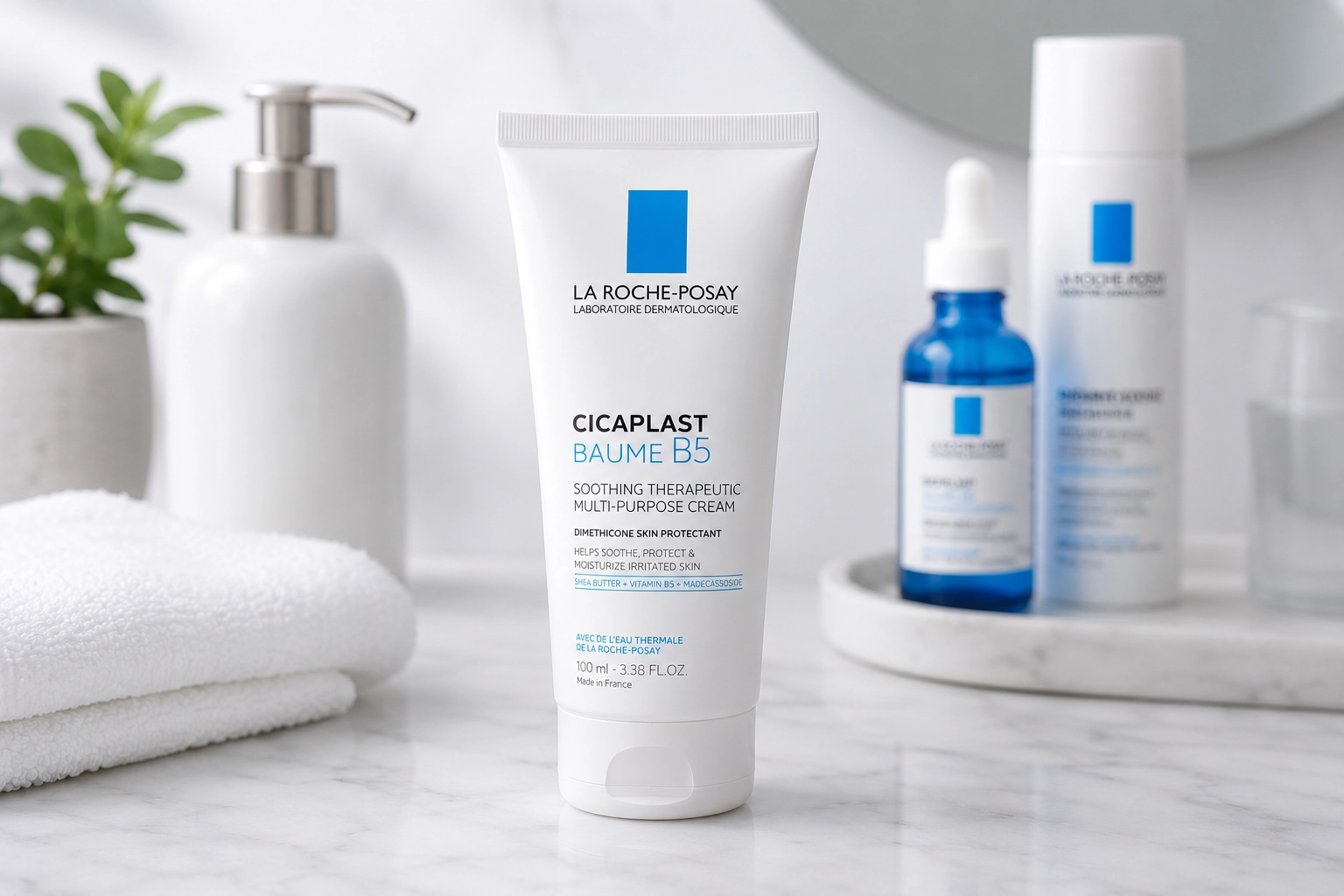
La Roche Posay Cicaplast is a multi purpose barrier repair range from the French dermatological brand La Roche Posay. It is designed to soothe, repair, and protect a compromised skin barrier, whether the damage comes from harsh skincare actives, eczema flare ups, post procedure recovery, or everyday dryness. Its hero product, Cicaplast Baume B5+, is a rich balm for the face, body, and lips that works as both a daily moisturizer and an intensive skin barrier repair treatment.
Cicaplast Product Range: Quick Comparison
| Product | Best For | Texture | Price |
| Cicaplast Baume B5+ | Barrier repair, dry & sensitive skin | Thick balm | $18 to $20 |
| Cicaplast Baume B5 UV SPF 50 | Daily use + sun protection | Cream | $17 to $30 |
| Cicaplast Gel B5 | Post procedure (laser, peels) | Lightweight gel | $22 |
| Cicaplast Mains (Hand Cream) | Dry, cracked hands | Rich cream | $12 |
| Cicaplast Lip Balm B5 | Dry, chapped lips | Balm | $9 |
The main focus of this review is the Baume B5+ the core barrier repair product that drives most of the search interest and dermatologist recommendations.
Baume B5 vs. B5+: What’s New?
This is the question Google gets asked constantly, and it deserves a direct answer.
The original Cicaplast Baume B5 built its reputation on a simple, effective formula: 5% Panthenol, Madecassoside, and antibacterial minerals (zinc, copper, manganese). It worked well, and it still does.
The Baume B5+ is the upgraded formula. It keeps everything from the original but adds one significant new ingredient Tribioma, La Roche Posay’s proprietary prebiotic complex. The texture has also been refined: the B5+ spreads more easily, leaves less white cast, and absorbs faster than the original.
Bottom line: If you liked the original B5, the B5+ is more than a name change. It adds Tribioma and updates the formula while keeping the core barrier supporting ingredients.
Tribioma The Prebiotic Complex That Sets B5+
Tribioma is La Roche Posay’s exclusive prebiotic complex added to the B5+ formula. It works by supporting the skin’s natural microbiome, the ecosystem of beneficial bacteria that keeps skin resilient and balanced.
When your skin barrier is damaged, your skin microbiome often becomes unbalanced as well. Tribioma helps restore that balance, allowing your skin to recover beyond the surface and become more resilient against future irritation. This is what sets Cicaplast Baume B5+ apart from traditional barrier repair creams that mainly target surface level dryness.
Key Ingredients What Actually Makes It Work
The Cicaplast Baume B5+ formula combines four core barrier repair ingredients that work together to soothe, protect, and strengthen the skin barrier:
- 5% Panthenol (Vitamin B5): Helps soothe and moisturize dry, irritated skin while supporting the skin barrier.
- Madecassoside: Derived from Centella Asiatica. It reduces redness and calms reactive skin without clogging pores.
- Tribioma: Prebiotic complex that restores microbiome balance and builds long term barrier resilience.
- Zinc, Copper & Manganese Gluconates: Antibacterial minerals that prevent infection in compromised skin and support healing.
The formula also includes La Roche Posay Thermal Spring Water, which is rich in selenium and known for its natural soothing and anti inflammatory properties, helping calm irritated and sensitive skin.
Best Skin Types for Cicaplast
Ideal Skin Types & Situations
- Dry and very dry skin Cicaplast Baume B5+ works especially well for dry skin. Its shea butter and glycerin formula provides deep, long lasting hydration while supporting the skin barrier.
- Sensitive and reactive skin This barrier repair cream is fragrance free, paraben free, and dermatologist tested, making it suitable even for highly sensitive skin.
- Post procedure recovery Dermatologists often recommend Cicaplast after chemical peels, microneedling, IPL, and non ablative laser treatments to help support skin recovery.
- Eczema prone skin Recognized by the National Eczema Association, it is suitable for adults, children, and babies over one week old.
- Barrier damaged skin Whether your skin barrier is compromised by retinol, over exfoliation, or harsh weather, Cicaplast Baume B5+ is designed to soothe, repair, and protect it.
Is It Safe for Oily, Acne Prone Skin?
This is the most searched concern and it’s worth addressing honestly.
Cicaplast Baume B5+ contains ingredients like shea butter and dimethicone, which are considered rich emollients. However, it is officially labeled as non comedogenic, meaning it is formulated not to clog pores, and for most skin types, it lives up to this claim.
That said, if you have very oily or acne prone skin, applying a thick balm all over your face every day can feel heavy and may lead to congestion depending on your skin’s tolerance. A better approach is to use it strategically apply it only on dry patches, flaky areas, or irritated spots instead of using it as an all over moisturizer. Alternatively, Cicaplast Gel B5 offers a lighter texture that is generally better suited for oily skin types.
Texture, Application & Layering Guide
How to Use It
Cicaplast Baume B5+ has a rich, thick balm texture, but it absorbs well when applied the right way. Take a small amount and warm it between your fingertips first this helps soften the formula and makes it easier to spread evenly across the skin.
Apply it as the final step in your skincare routine, after serums and before sunscreen or makeup. At night, you can use a slightly thicker layer so it works as an intensive barrier repair treatment while you sleep, allowing the skin to absorb it more effectively and recover overnight.
Slugging with Cicaplast
Cicaplast has become one of the most popular slugging products on TikTok and for good reason. It’s less occlusive than Vaseline but more effective than a standard moisturizer, making it ideal for the slugging method. Apply a thin layer as the final step in your PM routine when your skin needs extra moisture and protection overnight. This is especially effective during retinol adjustment periods or after sun exposure.
Layer Cicaplast with Retinol or Salicylic Acid
With Retinol: Apply retinol first and wait 10 to 15 minutes, then layer Cicaplast Baume B5+ on top. This “sandwich method” helps reduce dryness and irritation while supporting the skin barrier.
With Salicylic Acid or AHAs: Use your exfoliating acid first, let it absorb fully, then apply Cicaplast to calm sensitivity and prevent moisture loss caused by exfoliation.
Important: Cicaplast can generally be layered with Vitamin C, but if your skin is irritated or sensitive, using them in separate routines may feel more comfortable.
Recommendation:
Buy it if: You have dry skin, a damaged barrier from over exfoliation, or need an overnight spot treatment for dry patches and raw skin.
Skip it if: You have extremely oily skin and prefer a lightweight daily moisturizer. In that case, a gel based barrier repair cream will be a better fit for your routine.
Pros & Cons
Pros:
- Truly multi purpose suitable for face, body, lips, babies, and post procedure skin
- Non comedogenic and fragrance free, making it suitable for sensitive skin
- Tribioma supports skin microbiome balance, not just surface level hydration
- Recognized by the National Eczema Association
- Affordable price point for a full size tube.
Cons:
- Thick texture may feel heavy on oily or combination skin when applied all over the face
- Can leave a slight white cast on deeper skin tones (less than the original B5, but still noticeable)
- Not ideal as a standalone daily moisturizer for oily skin types.
Final Verdict
Overall, this La Roche Posay Cicaplast review shows that Cicaplast Baume B5+ is a reliable barrier repair cream that genuinely delivers on its promise, especially for dry, sensitive, or irritated skin. It helps calm and restore the skin barrier without relying on hype, making it a strong everyday option for recovery focused skincare. However, for very oily skin types, it may feel too heavy for full face use, so a lighter gel alternative would be a better fit.
FAQS
Q1. Can I use Cicaplast every day?
Ans. Yes, for dry, sensitive, and normal skin types, daily use is perfectly safe and recommended. For oily skin, use it targeted on dry patches rather than all over.
Q2. Can I use Cicaplast under makeup?
Ans. Yes, but apply a very thin layer and allow 5 to 10 minutes for it to absorb before applying foundation. The B5 UV SPF 50 version works better as a makeup base due to its lighter texture.
Q3. Is Cicaplast B5 or B5+ better?
Ans. The B5+ is the better formula. It retains everything from the original and adds Tribioma for microbiome support. The texture is also improved, it spreads more easily and leaves less white cast.
Q4. Is Cicaplast B5+ Good for a Damaged Skin Barrier?
Ans. Yes. Cicaplast Baume B5+ is designed to soothe dry and irritated skin while supporting the skin barrier, making it a useful option when your skin feels compromised.
Q5. Is Cicaplast Good for Acne Prone Skin?
Ans. It can be, especially for dry or irritated areas. Although the formula is non comedogenic, its rich texture may feel heavy on very oily skin, so targeted use can work better.
Q6. Can You Use Cicaplast Every Night?
Ans. Yes. Cicaplast Baume B5+ can be used daily, including at night, when your skin needs extra moisture and barrier support.
Reviewed by Maya Kim, Beauty & Skincare Writer at Candid Discoveries