




Skin First Makeup 2026: What it is, why it works, and the exact products worth buying at every budget.
Skin First Makeup 2026 is becoming one of the biggest beauty trends of the year. Instead of hiding the skin under thick foundation, this trend focuses on lightweight, breathable products that enhance natural skin texture while still giving a polished look. Here is everything worth knowing before switching up your routine.
What Is Skin First Makeup?
Skin first makeup is an approach that prioritizes skin health and complexion care over full coverage. Instead of layering heavy foundations designed to create a flawless, airbrushed finish, it focuses on lightweight, skincare infused makeup such as tinted serums, breathable skin tints, and tinted moisturizers. These products help even out skin tone while allowing natural texture, hydration, and glow to show through. The result is a more natural, healthy looking complexion that enhances the skin rather than masking it.
Skin First Makeup vs. Skinimalism and No Makeup
Skin first makeup overlaps closely with skinimalism and the no makeup makeup look, but the terms are not exactly interchangeable. Skinimalism is the broader idea of using fewer products while letting healthy looking skin and natural texture remain visible. Skin first makeup applies that philosophy specifically to the complexion, using products such as skin tints, tinted moisturizers, and targeted concealer instead of heavy layers of foundation.
The goal is not to wear no makeup at all. It is to create a natural looking makeup finish where the skin still looks like skin. That is why lightweight, breathable formulas and strategic coverage are central to the trend
Why Is Skin First Makeup Trending in 2026
According to Fashion Times, skin first makeup is one of the defining movements of 2026 placing complexion health at the center of any look and treating makeup as an extension of skincare rather than a mask layered on top. The driving force behind this shift is a broader cultural move away from perfection and toward skin that looks healthy, rested, and real. Mintel’s 2026 beauty trend forecast confirmed that imperfection and emotional comfort are becoming central themes in modern beauty culture, with lightweight, breathable skin first formulations replacing heavy products designed only to create flawless coverage.
How to Build a Skin First Base
The routine for skin first makeup 2026 is deliberately short. A few well chosen products can outperform a full kit chosen by habit.
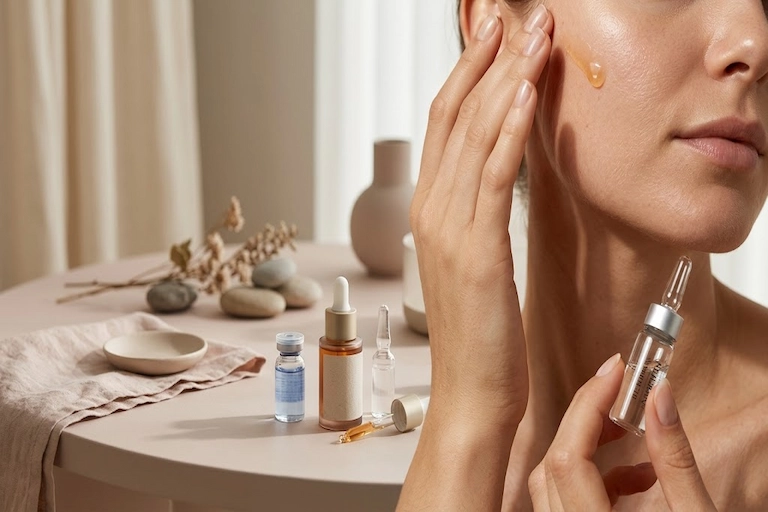
Step 1: Prep with hydration. Celebrity makeup artist Nikki DeRoest emphasizes starting with hydration: Skin in 2026 is breathable, natural, and alive. It’s not about full coverage, it’s about letting your skin move, glow, and show through.” A lightweight moisturizer or hydrating serum can help create a smoother, more hydrated base, especially if your skin tends to feel dry.
Step 2: Choose a skin tint, not a foundation. This is the most important decision in the routine. A sheer skin tint applied with fingers warms into the skin rather than sitting on top of it. The finish reads as better skin in natural light, not a product layer. A heavy foundation cancels this effect entirely.
Step 3: Apply concealer only where needed. Avoid full face concealer application. Instead, use a lightweight concealer close to your skin tone on targeted areas such as blemishes and redness, using a slightly brighter shade only where you want to subtly brighten the under eye area. This keeps the makeup looking natural and skin like instead of heavy or overcorrected.
Step 4: Set only the T zone with powder. Applying loose powder across the entire face can flatten the complexion and reduce the natural glow created by skin first makeup products. A light dusting on the T zone is usually enough, especially for oily or combination skin types, while still maintaining a fresh, luminous finish.
Best Skin First Makeup Products Tested
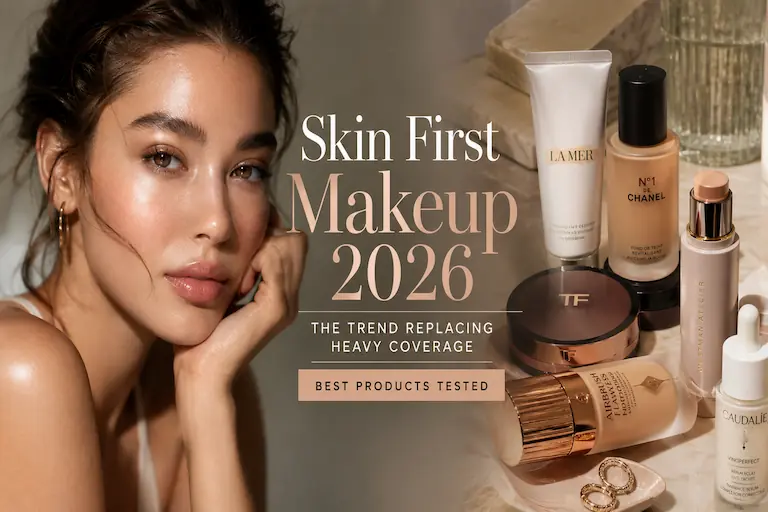
Budget Pick: Maybelline Super Stay Up to 24HR Skin Tint with Vitamin C ($17.99)
The Maybelline Super Stay Skin Tint is a lightweight, long wearing formula infused with a Vitamin C derivative that delivers buildable light to medium coverage with a natural, radiant, skin like finish. The formula is water, sweat, and transfer resistant making it one of the most practical drugstore skin tints available. Available in 18 shades tailored to warm, cool, and neutral undertones from very light to very deep, it can be worn alone or layered with other products for more coverage.
- Price: $17.99
- Coverage: Light to medium (buildable)
- Finish: Natural, radiant skin like
- Key Ingredient: Vitamin C derivative
- Best for: Normal, combination, and oily skin types
- Available at: Target, Ulta, Amazon, and local drugstores.
Prestige Pick: ILIA Super Serum Skin Tint SPF 40 ($48)
ILIA’s Super Serum Skin Tint SPF 40 combines makeup, skincare, and mineral SPF into one step, powered by hyaluronic acid to plump and hydrate, niacinamide to minimize pores and refine tone, and plant based squalane to seal in moisture without clogging pores. The non comedogenic formula is safe for sensitive skin, vegan, cruelty free, and formulated without fragrance, gluten, or silicone. With more than 13,000 reviews on ILIA’s site, it is one of the brand’s most established and widely reviewed skin tints.
- Price: $48
- Coverage: Light with a dewy finish
- Finish: Luminous, skin like
- SPF: 40 mineral (non nano zinc oxide)
- Key ingredients: Hyaluronic acid, niacinamide, plant based squalane
- Best for: Normal to dry skin, not ideal for very oily skin types
- Available at: Sephora, ILIA website, Nordstrom
Hybrid Beauty Pick: Armani Beauty Luminous Silk Skin Tint
Armani Beauty’s skin tint is positioned as a lightweight complexion option for evening out the look of skin without creating a heavy base. Its radiant finish makes it a natural fit for readers who want more polish than a sheer skin tint while keeping the overall look fresh. It leaves skin looking smooth, even, and lit from within.
- Price: $49
- Coverage: Light to medium
- Finish: Radiant, lit from within
- Best for: Women who want a more polished finish while staying within the no makeup makeup look framework
- Available at: Sephora, Nordstrom, Armani Beauty website
Common Mistakes to Avoid
Choosing a full coverage foundation
The base product determines whether a skin first makeup look feels natural or heavy. Full coverage foundations usually require more powder to control transfer, which reduces the luminous, skin like finish that lightweight makeup is designed to create.
Applying too much product
With skincare infused makeup and skin tints, less product usually creates a better result. Over applying layers or not allowing skincare products to absorb properly can lead to pilling, patchiness, and an uneven finish.
Setting the entire face with powder
A light dusting of powder on the T zone is usually enough for oil control. Applying powder across the full face can flatten the complexion and remove the healthy glow that skin first makeup aims to maintain.
Skipping proper shade matching.
Even lightweight skin tints can look unnatural if the undertone is wrong. Always test shades along the jawline, allow the formula to settle for at least 30 minutes, and check the color in natural light before choosing a match.
Skin first makeup is one of the most practical beauty trends of 2026. These lightweight, skincare infused products deliver a radiant, natural looking finish that looks good in real life, not just through social media filters. If you still rely on heavy foundation out of habit, switching to a breathable skin tint can completely change your everyday makeup routine.
Choose the Maybelline Super Stay Skin Tint if you want an affordable option with bright, lightweight coverage. If you prefer a premium skincare makeup hybrid with mineral SPF and a luminous finish, the ILIA Super Serum Skin Tint offers all three in one step. Both reflect the core idea behind modern skin first beauty: your skin, only more even, polished, and naturally refined looking.
FAQS
Q1. Does skin first makeup hide acne and dark spots?
Ans. Not completely, and that is part of the appeal. Skin first makeup products, such as skin tints and tinted serums provide sheer to light coverage, allowing natural skin texture, freckles, and some discoloration to remain visible instead of masking the skin entirely. For acne marks or dark spots that need extra coverage, a targeted concealer works well alongside a skin tint without disrupting the lightweight, skin like finish.
Q2. Do I still need to apply moisturizer before a tinted serum?
Ans. It depends on the formula and your skin type. Some skincare makeup hybrids, like ILIA Super Serum Skin Tint, can work as skincare, SPF, and base in one step. However, dry skin types may still benefit from a lightweight moisturizer underneath to improve hydration and prevent pilling.
Q3. What is the best breathable skin tint for oily skin?
Ans. For oily skin, look for a lightweight skin tint with a natural or soft radiant finish rather than choosing a formula solely for its glow claims. Apply a small amount of translucent powder through the T zone if needed. The best option will depend on how your skin reacts to the formula and how much coverage and wear time you want
Q4. Is skin first makeup good for mature skin?
Ans. Yes. Lightweight, flexible formulas can be useful when you want natural skin texture to remain visible rather than emphasizing it with thick layers. A hydrating base, light skin tint, and targeted concealer can create a polished finish without requiring heavy foundation across the entire face..
Reviewed by Maya Kim, Beauty & Skincare Editor at Candid Discoveries.